
Closing Costs: The Complete List of Every Fee You'll See
Closing costs typically run 2% to 5% of the home price, but the line items on your estimate can look like alphabet soup. Here is every common fee, what it pays for, and which ones you can actually negotiate.
What Closing Costs Actually Are
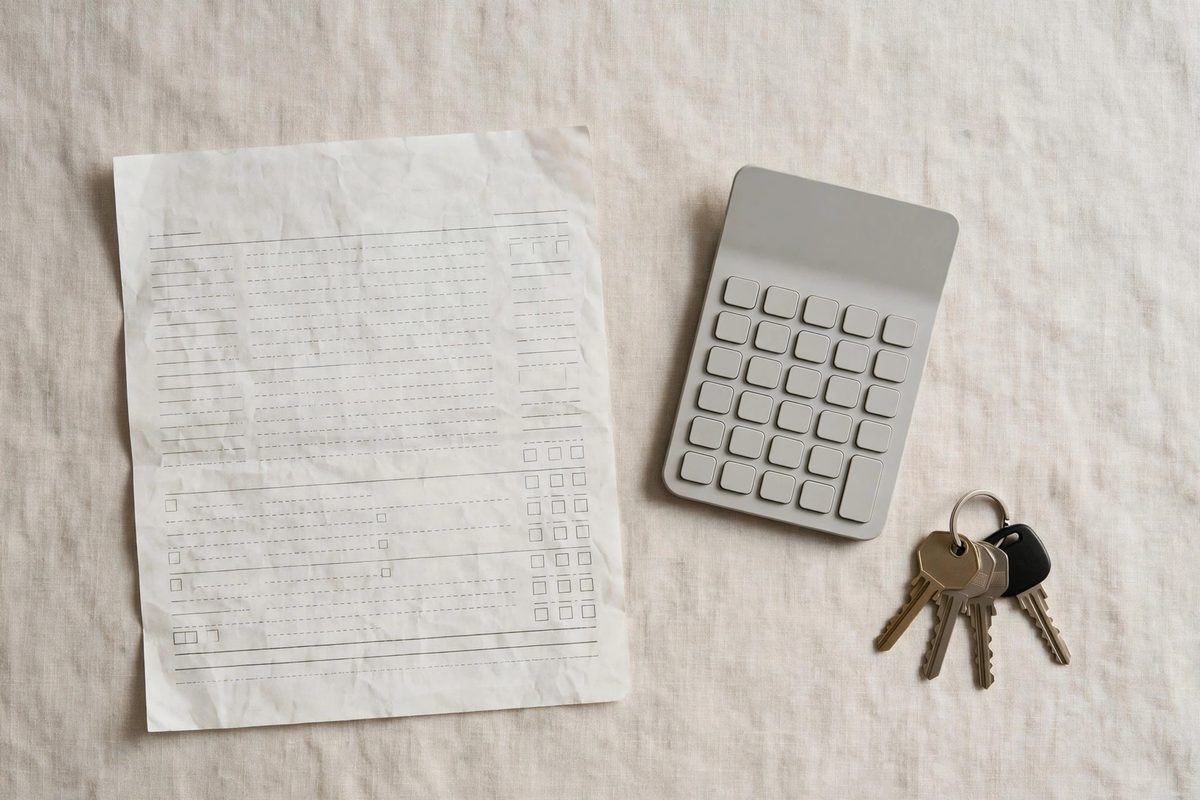
Closing costs are the fees and prepaid expenses you pay to finalize a mortgage and transfer ownership of a home. They are separate from your down payment. On a typical purchase, buyers should budget roughly 2% to 5% of the home price. On a $400,000 home with a $320,000 loan, a realistic itemized estimate comes to about $11,300 in total closing costs, not counting the down payment itself.
The fees fall into three buckets: lender fees, third-party fees, and prepaids. Understanding which bucket each charge belongs to tells you whether you can shop for it, negotiate it, or simply have to accept it. You can model your own total with our closing cost calculator before you ever talk to a lender.
Lender Fees
These are charged by the mortgage company for originating and processing your loan:
- Origination fee: Sometimes a flat fee or around 0.5% to 1% of the loan amount for creating the loan. Not all lenders charge it, and it is often negotiable.
- Application fee: A smaller fee, often $0 to $500, to start processing. Some lenders roll it into the origination fee.
- Underwriting fee: Typically $400 to $900 for the work of verifying your income, assets, and credit.
- Processing fee: Often $300 to $900 for gathering and organizing your file.
- Credit report fee: Usually $30 to $100 to pull your credit reports and scores.
- Discount points: Optional. One point equals 1% of the loan amount and buys a lower interest rate. This is a choice, not a requirement.
- Rate lock fee: Most lenders do not charge for a standard 30 to 45 day lock, but extended locks can cost extra.
Third-Party Fees
These pay outside companies for services the transaction requires. Many of them can be shopped:
- Appraisal: Typically $300 to $500. The lender orders it to confirm the home's value supports the loan.
- Home inspection: Usually $300 to $500, paid by the buyer directly. Optional but strongly recommended.
- Title search and title insurance: The search confirms the seller legally owns the property; the lender's title policy protects the lender. An owner's policy is a separate, one-time purchase that protects you.
- Attorney or settlement fees: Vary by state. Some states require an attorney to close; others use escrow or title companies.
- Survey: $300 to $600 in many areas to confirm property boundaries, sometimes required by the lender or title company.
- Flood certification: A small fee, usually under $50, to check whether the home sits in a flood zone.
- Recording fees: Charged by the county to record the deed and mortgage, often $25 to $250.
- Transfer taxes: State or local taxes on the transfer of ownership. Who pays varies by location and contract.
Prepaids and Escrow Deposits
Prepaids are not really fees — they are your own future expenses collected in advance:
- Homeowners insurance: Lenders usually collect the first year's premium at closing, often $1,200 to $2,500 or more depending on the state.
- Property taxes: You may prepay several months of taxes, and your escrow account is seeded with a cushion, commonly about two months of taxes and insurance.
- Prepaid interest: Interest from your closing date to the end of that month, so closing early in the month costs slightly more here.
- PMI or mortgage insurance: If you put down less than 20%, the first premium may be collected at closing.
To see how taxes and insurance flow into your monthly payment, try the mortgage payment calculator, and read our guide on how escrow accounts work.
Who Pays What — and What You Can Negotiate
Traditionally the buyer pays most lender and loan-related fees, while the seller often pays the real estate commission and, in some states, the owner's title policy. But nearly everything is negotiable in the purchase contract. Common strategies include:
- Ask for seller concessions: The seller contributes a set amount toward your closing costs, subject to loan program limits.
- Shop the shoppable fees: Title, settlement, and survey services can often be chosen by you. Your Loan Estimate lists which services you may shop for.
- Compare lenders: Origination, underwriting, and processing fees vary widely between lenders for the exact same loan.
- Consider a lender credit: Accepting a slightly higher rate in exchange for a credit toward closing costs can make sense if cash to close is tight — compare the long-term cost first.
Your lender must give you a Loan Estimate within three business days of application. Our guide on how to read a Loan Estimate walks through every section so you can spot padded fees before you commit. Pair it with the down payment calculator to plan your total cash to close, since down payment plus closing costs is the real number you need in the bank.
Keep reading
 Buying Process & Costs
Closing Costs in Texas: What Buyers Actually Pay
Closing costs in Texas explained: state-set title policy rates, the 1.47% property tax, homestead exemption, a…
 Buying Process & Costs
Closing Costs in California: What Buyers Should Budget
Closing costs in California explained: escrow companies, city transfer taxes, Prop 13 property tax estimates, …
 Buying Process & Costs
Closing Costs in Florida: Doc Stamps, Title and the Insurance Bill
Closing costs in Florida explained: documentary stamp taxes, title insurance, the homestead exemption, high in…
Frequently asked questions
How much are closing costs on a $400,000 home?
Can closing costs be rolled into the loan?
Which closing costs are negotiable?
When do I find out my exact closing costs?
Sources & further reading
- Consumer Financial Protection Bureau — Owning a Home hub
- Federal Housing Finance Agency (FHFA)
- Federal Reserve — consumer resources
Official sources for program rules and consumer rights. Zorvex is not affiliated with these agencies; figures here are estimates for education.